
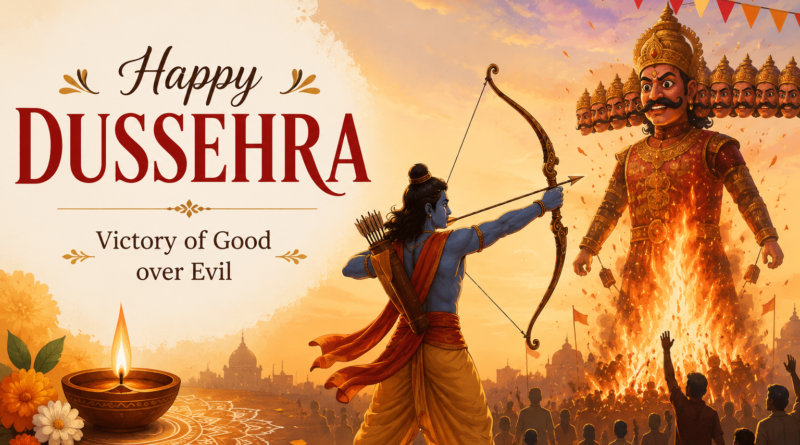
Dussehra Essay in English for Kids
Dussehra is one of India’s most important festivals. Also known as Vijayadashami, it is associated with the victory of good over evil and is celebrated in different ways across the country.
For children, Dussehra is more than a festival of colourful decorations, performances and celebrations. It is also an opportunity to learn about courage, righteousness, responsibility and the importance of choosing what is right.
In 2026, Dussehra will be celebrated on October 20 in India.
Quick Navigation
What Is Dussehra?
Dussehra, also called Vijayadashami, is celebrated on the tenth day following the nine days of Navratri.
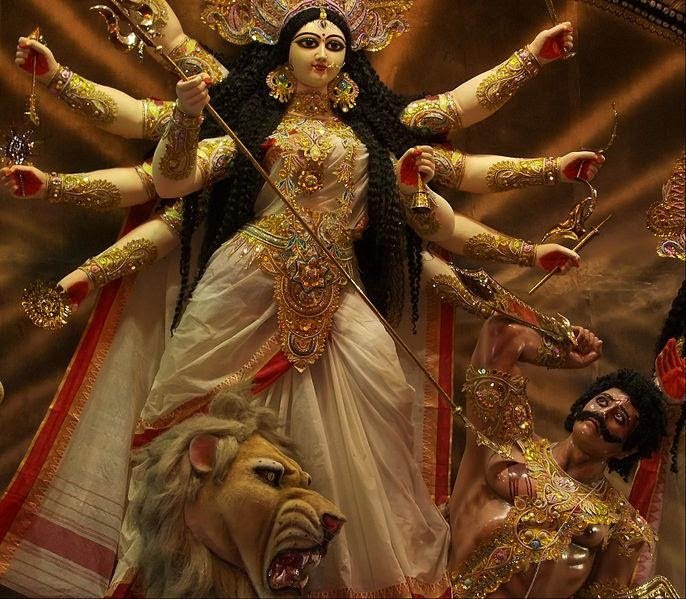
The festival has different traditions across India. In many parts of the country, Dussehra is associated with Lord Rama‘s victory over Ravana in the Ramayana. In several eastern and northeastern regions, Vijayadashami marks the conclusion of Durga Puja and celebrates Goddess Durga’s victory over Mahishasura.
Although the stories and customs vary, the central idea is similar: good ultimately triumphs over evil.
When Is Dussehra Celebrated?
Dussehra is celebrated on the tenth day of the Hindu month of Ashwin, according to the Hindu lunar calendar.
Because the date follows the lunar calendar, it changes from year to year.
In 2026, Dussehra falls on Tuesday, October 20.
Why Do We Celebrate Dussehra?
One of the best-known stories associated with Dussehra comes from the Ramayana.
According to the epic, Lord Rama fought Ravana after Sita was taken to Lanka. After a long battle, Rama defeated Ravana.
The victory is traditionally remembered as the triumph of righteousness over wrongdoing.
In many parts of India, large effigies of Ravana, along with those of Kumbhakarna and Meghanada, are prepared and burned during Dussehra celebrations.
For children, this story offers a simple lesson: power and knowledge are not enough if they are used without wisdom and good character.
Dussehra and the Story of Lord Rama
Lord Rama is often described as an example of courage, responsibility and adherence to dharma.
The Ramayana contains many stories and characters, but the Dussehra celebration focuses particularly on the conflict between Rama and Ravana.
Ravana is traditionally portrayed as a powerful and knowledgeable ruler who nevertheless made harmful choices.
Rama’s victory is therefore remembered not simply as one person defeating another, but as a symbolic victory of good over evil.
This is one reason the festival continues to carry meaning for generations of children.
How Is Dussehra Celebrated in India?
Dussehra celebrations vary from one region to another.
In many cities and towns, people organise Ramlila, dramatic performances based on episodes from the Ramayana.
At the end of the performances, large effigies of Ravana are often burned.
In West Bengal and some eastern parts of India, Vijayadashami marks the conclusion of Durga Puja. In other regions, people celebrate the day with prayers, processions, cultural events and family gatherings.
Dussehra is therefore not a single celebration with exactly the same customs everywhere.
Its traditions reflect India’s diverse cultures and regional histories.
What Can Children Learn From Dussehra?
Dussehra offers several meaningful lessons for children.
1. Good Choices Matter
The festival reminds us that our choices have consequences. Being powerful or talented does not make someone good. What matters is how we use our abilities.
2. Courage Is Important
Doing the right thing is not always easy. Dussehra teaches children that courage means standing up for what is right even when there are difficulties.
3. Character Matters More Than Power
Many traditional stories associated with Dussehra show that knowledge, wealth and strength alone do not guarantee happiness or respect.
Good character matters too.
4. We Should Learn From Our Mistakes
Stories from Indian epics contain characters who make mistakes and face the consequences of their decisions.
Children can learn to recognise their own mistakes and make better choices.
How Can Children Celebrate Dussehra?
Children can celebrate Dussehra in creative and meaningful ways.
They can:
- Read a child-friendly version of the Ramayana.
- Watch or participate in a Ramlila performance.
- Make Dussehra-themed drawings.
- Create paper crafts representing the festival.
- Learn about how different Indian regions celebrate Dussehra.
- Discuss the meaning of good and evil with parents or teachers.
- Write an essay about the festival.
- Share one good habit they would like to develop.
Celebration becomes more meaningful when children understand why a festival is observed.
Dussehra Essay in 10 Lines
- Dussehra is an important festival celebrated in India.
- It is also known as Vijayadashami.
- Dussehra is celebrated on the tenth day after Navratri.
- In 2026, Dussehra will be celebrated on October 20.
- The festival is associated with the victory of Lord Rama over Ravana.
- In many parts of India, people organise Ramlila performances.
- Ravana’s effigy is traditionally burned during many Dussehra celebrations.
- In eastern India, Vijayadashami marks the conclusion of Durga Puja.
- Dussehra teaches us about courage, righteousness and good character.
- The festival reminds us that good can overcome evil.
A Short Dussehra Essay for Kids
Dussehra is an important Indian festival celebrated as Vijayadashami. It marks the victory of good over evil and is celebrated in different ways across India. In many parts of the country, it is associated with Lord Rama’s victory over Ravana. People organise Ramlila performances and burn large effigies of Ravana. In eastern India, Vijayadashami marks the end of Durga Puja and celebrates Goddess Durga’s victory over Mahishasura. Dussehra teaches children that courage, honesty and good character are important. It is a festival that encourages us to choose what is right and learn from our mistakes.
Why Is Dussehra Important for Children?
Festivals help children understand the stories, traditions and values that have shaped Indian culture.
Dussehra is especially useful as a learning opportunity because its central message is easy for children to understand: our actions and choices matter.
The festival encourages children to think about the difference between simply being powerful and using one’s abilities responsibly.
Moral of Dussehra
Choose what is right, stand up for good values and remember that character is more important than power.


