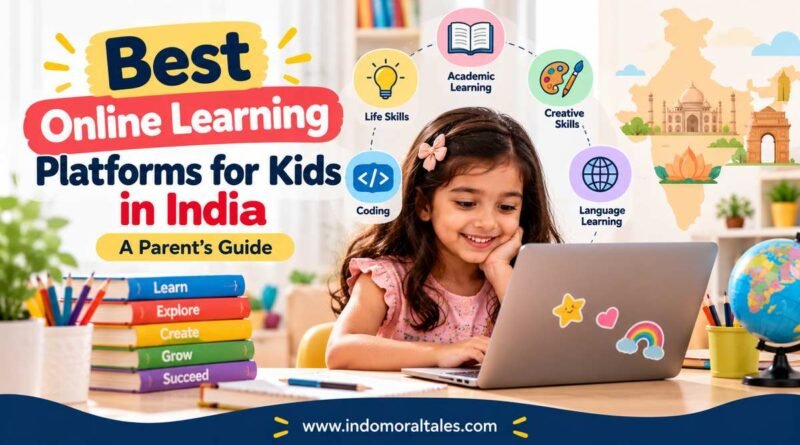
Best Online Learning Platforms for Kids in India: A Parent’s Guide
Online learning platforms give children access to lessons, practice exercises, digital textbooks and live classes beyond the traditional classroom. For parents in India, these resources can support schoolwork, strengthen foundational skills and introduce children to subjects that interest them.
However, not every platform offers the same learning experience. Some provide free curriculum-based resources, while others offer structured courses, live teachers or personalised learning programmes. The right choice depends on a child’s age, school curriculum, learning needs and the level of guidance required.
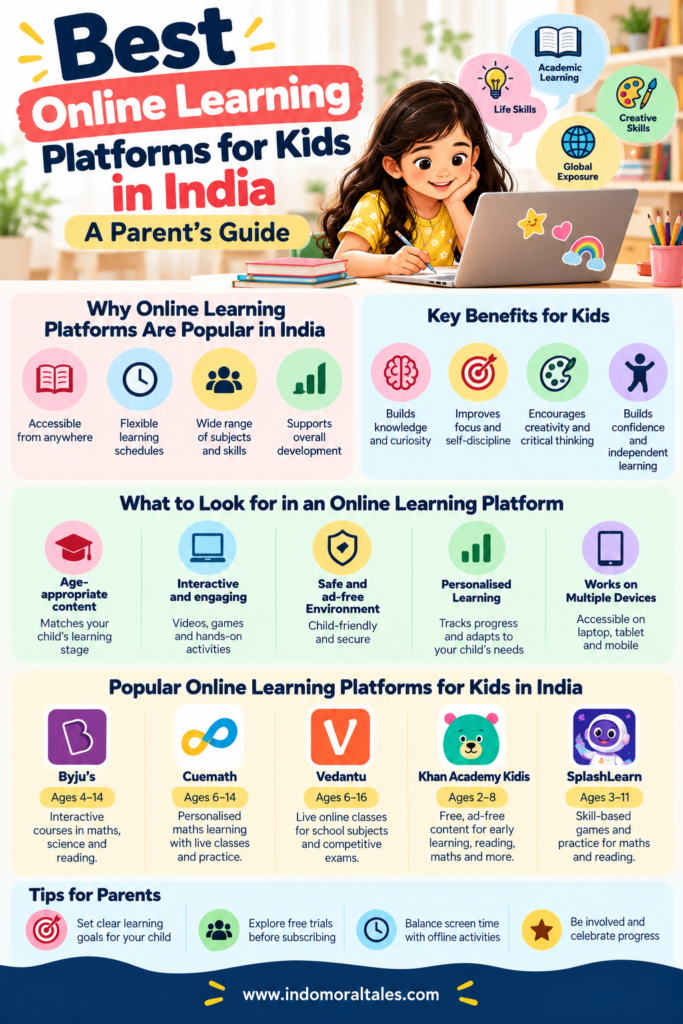
Here are five best online learning platforms parents can explore, along with practical advice on choosing one.
Quick Navigation
What Are the Best Online Learning Platforms for Kids in India?
Khan Academy India: Best for Free Academic Learning
Best for: School students who need additional practice in mathematics and other academic subjects.
Khan Academy India offers free educational resources aligned with the Indian curriculum. Students can access lessons and practice materials for mathematics across several school grades, with additional resources available for other subjects.
The platform supports multiple languages, including English, Hindi, Hinglish, Gujarati, Marathi, Kannada, Punjabi, Assamese and Odia, although language availability varies by subject and course.
Khan Academy India is a useful starting point for parents seeking supplementary learning without committing to a paid subscription. Children can revisit difficult concepts and practise at their own pace.
Consider it if: Your child needs additional academic practice and can work independently with occasional parental guidance.
2. DIKSHA: Best for Curriculum-Linked Resources
Best for: Students who need supplementary school materials and digital learning resources.
DIKSHA is a national digital platform for school education in India. It provides educational resources for students and teachers, including learning materials associated with school textbooks and curricula.
Its resources can help children revisit classroom topics and access supplementary educational content. Availability varies by grade, subject, language and participating education board.
For parents, DIKSHA is worth exploring before purchasing a supplementary learning subscription, particularly when the objective is to reinforce school lessons.
Consider it if: You want additional learning resources that relate to your child’s schoolwork.
3. Vedantu: Best for Teacher-Led Online Learning
Best for: Students who benefit from structured lessons and teacher interaction.
Vedantu offers online tuition and learning programmes across school grades. Its offerings include live classes, individual tutoring and courses for younger learners.
Unlike a self-paced learning resource, teacher-led programmes allow children to ask questions and receive explanations during lessons. This can be useful when a student struggles with a concept or needs a more structured study routine.
Parents should compare the available courses, teaching format, class size, teacher support and total fees before enrolling.
Consider it if: Your child needs regular instruction, opportunities to ask questions or additional academic guidance.
4. BYJU’S: An Option to Evaluate for Structured Digital Learning
Best for: Families exploring app-based and structured school-learning programmes.
BYJU’S has offered digital learning programmes for school students, including educational videos and structured academic content.
However, parents should carefully verify the current availability of specific programmes, the operating entity providing the service, subscription terms, customer support and refund conditions before making a purchase. Historical product descriptions and promotional claims should not be treated as confirmation that a particular course is currently available.
Compare the proposed learning programme against free alternatives and other providers before paying.
Consider it if: You have verified that the specific programme meets your child’s needs and that its current commercial terms are clear.
5. Vedantu’s Early Learning Programmes: For Foundational Skills
For younger children, Vedantu also lists programmes covering areas such as phonics, reading, mathematics and coding.
These courses may suit families looking for guided learning in a particular skill rather than a broad academic platform. However, availability, age eligibility, teaching format and pricing can differ between programmes.
Parents should assess whether the teaching approach is appropriate for their child’s developmental stage and whether the course offers enough individual attention.
Consider it if: Your child needs structured support with a foundational skill and responds well to teacher-led activities.
How to Choose an Online Learning Platform for Your Child
Before enrolling, compare the following factors.
Match the Platform to Your Child’s Needs
- Identify the specific problem you want to solve. Does your child need help understanding school mathematics, practising English, revising science or learning a new skill?
- A focused solution is often more useful than subscribing to a platform simply because it offers many courses.
Check Curriculum and Grade Compatibility
- Indian schools may follow CBSE, CISCE or state-board curricula. Check whether the platform’s lessons match your child’s grade and school syllabus.
- A platform may provide excellent explanations without covering every chapter in the order followed by your child’s school.
Compare Live and Self-Paced Learning
- Self-paced resources let children revisit lessons and practise independently. Live classes provide direct interaction with a teacher but require scheduled participation.
- Choose the format that suits your child’s learning habits, independence and need for guidance.
Review Fees and Subscription Conditions
- Check the complete course fee, renewal terms, cancellation process and refund policy. Ask whether the advertised price includes all classes, materials and assessments.
- Avoid making a decision based solely on promotional discounts or claims about academic improvement.
Check Privacy and Online Safety
- Review the platform’s privacy policy, account requirements, data collection practices and communication channels. For live classes, understand who can contact your child and whether sessions are recorded.
- Younger children should use online learning tools with appropriate adult supervision.
Frequently Asked Questions
Which online learning platform is best for kids in India?
There is no single best platform for every child. Khan Academy India offers free academic resources, DIKSHA provides school-related learning materials, and Vedantu offers teacher-led learning programmes. The right choice depends on the child’s grade, learning objectives and need for guidance.
Are free online learning platforms enough for school students?
Free resources can be sufficient for revision and additional practice, depending on the child’s needs. Paid tutoring may be worth considering when a student needs individual explanations, structured lessons or regular teacher feedback.
What should parents check before buying an online course?
Review the syllabus, teaching format, instructor credentials, class size, total fees, refund terms, privacy practices and availability of a trial class or demonstration.
Can online learning replace school education?
Online platforms can supplement classroom instruction, but they do not automatically replace the broader educational experience provided by schools, teachers, practical activities and interaction with other students.
Final Thoughts
Choosing an online learning platform should begin with your child’s educational needs, not the number of features a company advertises.
Start by identifying the subject or skill that needs attention. Compare free and paid resources, verify the curriculum and evaluate whether your child needs independent practice or direct teacher support.
A well-chosen platform can complement classroom learning. The most important measure of its value is whether your child develops a stronger understanding of the subject and becomes more confident applying what they learn.